

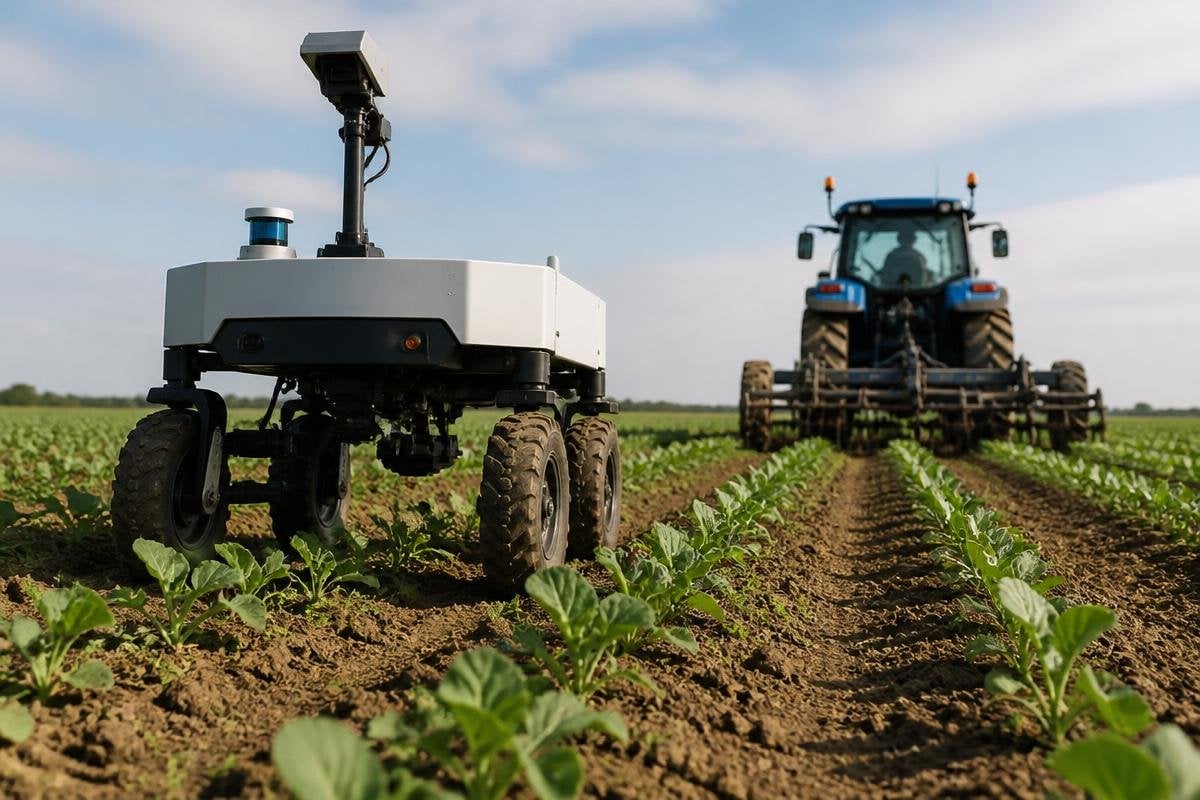
A field robot can spot a plant, compare it with its surroundings, and mark its location before a tractor reaches the same row. The hard part is telling a weed from a crop when leaves overlap, soil changes color, and light shifts during the day.
- Cameras inspect leaves, soil, and row patterns
- Software compares each plant with trained image examples
- The robot can spray, remove, or record weeds after detection
What the robot sees
Most weed-detection robots start with cameras mounted above the crop. A red-green-blue camera records the image a person would see, while some systems add near-infrared sensing to show differences in plant structure and leaf health.
The robot also records its position as it moves. Wheel sensors, GPS, and cameras can help track where each image came from. That location matters because the robot needs to return to the same plant with a nozzle, blade, or gripper.
Light creates a real problem. A leaf in bright sun can look different from the same leaf under cloud cover, so the software needs images from varied field conditions. Mud, dust, crop residue, and damaged leaves can also change the image.
How the software separates crop from weed
The software first finds plant-shaped areas in each camera frame. It then studies details such as leaf shape, color, size, stem position, and distance from the crop row. These details help the system decide which plants belong to the crop and which ones may be weeds.
Many systems use machine learning, a method in which software learns patterns from labeled images. A person marks the plants in training images, and the system adjusts its internal model until it can sort new images with fewer mistakes.
Some systems classify a whole image area. Others use segmentation, which marks the outline of each plant pixel by pixel. Segmentation takes more computing work, but it can help the robot aim a spray or cutting tool at one plant instead of treating the full row.
The software may also use the crop row as a clue. A plant sitting in the expected row position is more likely to be a crop. A plant between rows may be a weed, though that rule breaks down when crops are planted unevenly or weeds grow close to stems.
What happens after detection
Detection is only one part of the task. The robot must stop at the right point, keep the tool steady, and act without touching the crop.
A sprayer may apply herbicide to a small target area. A mechanical tool may cut or pull the plant. A camera-only system may record the location for a later pass by a worker or another machine.
The response depends on the crop, weed type, soil, and tool. A small weed that stands clear of the crop gives the system more room for error than a weed growing under a crop leaf.
A useful weed test puts the robot among real crop leaves, changing light, and uneven soil instead of giving it a clean lab image. Robot 24 can point you to field reports that name the crop, camera setup, and test result before you judge the system’s accuracy.
Where identification can fail
A robot can mistake crop residue for a weed, miss a small plant under a leaf, or confuse two species with similar shapes. These errors matter in different ways. A missed weed may keep growing, while a wrong spray or cut can damage the crop.
Training data also sets limits. A model trained on one crop variety, soil type, or region may need new images before it works well in another field. Weather adds another test. Rain can cover lenses, and dust can reduce image detail.
I’d judge a weed robot by its false actions, not by a clean demonstration. A trial should record missed weeds and crop damage across different rows and field conditions.
A practical check before buying
Use these questions to assess a system for your fields:
- Name the target crop: Ask which crop varieties and growth stages the software supports.
- Check the sensor setup: Find out if it uses RGB cameras, near-infrared sensing, or another sensor.
- Ask for field results: Request missed-weed and crop-damage figures from conditions close to yours.
- Test location control: Check how the robot keeps its tool over the selected plant as it moves.
- Plan for bad images: Ask what happens when rain, dust, shade, or leaf overlap blocks the view.
A useful system should show how it handles the cases that make plant recognition hard. The next question for any buyer is simple: can it remove weeds accurately enough in your crop to cost less than the work and chemicals it replaces?