

A growing art collection is exciting, but finding space for every new piece can become a challenge. The solution is not always a larger home or another empty wall. With a little creativity, you can display more artwork while making your collection feel intentional and cohesive.
This article will share five fresh ways to display your personal art collection without making your space feel cluttered.
Create a Layered Gallery Wall
A gallery wall makes it possible to bring multiple pieces together without requiring a separate wall for every artwork. Instead of arranging everything in a rigid grid, consider varying the sizes and visual weight of the pieces while maintaining enough space between frames to keep the arrangement from feeling crowded. Start with your largest or most important piece as an anchor, then position smaller works around it to create a balanced composition.
The frames can also help establish a connection between different pieces. Matching frames create a more unified appearance, while complementary finishes allow each artwork to retain its individuality. Before putting holes in the wall, arrange the pieces on the floor. Then, use paper templates to test the spacing and overall shape to see ideal display placements before making final changes.
Use Custom Framing to Give Each Piece a Purpose
As an art collection grows, not every piece needs to look exactly alike. Custom framing can instead be used to give individual works the presentation they need while creating subtle visual relationships throughout the collection.
A professional framer can consider the artwork’s dimensions, medium, colors, and display location when helping you select an appropriate frame and mat. Their expertise is useful when your collection has pieces with unusual dimensions. With a carefully selected mat, you can provide breathing room around a smaller artwork, while a deeper frame may give a dimensional piece the space it needs. Having custom solutions like this can also help you work within existing furniture or limited wall space.
Display Art on Picture Ledges
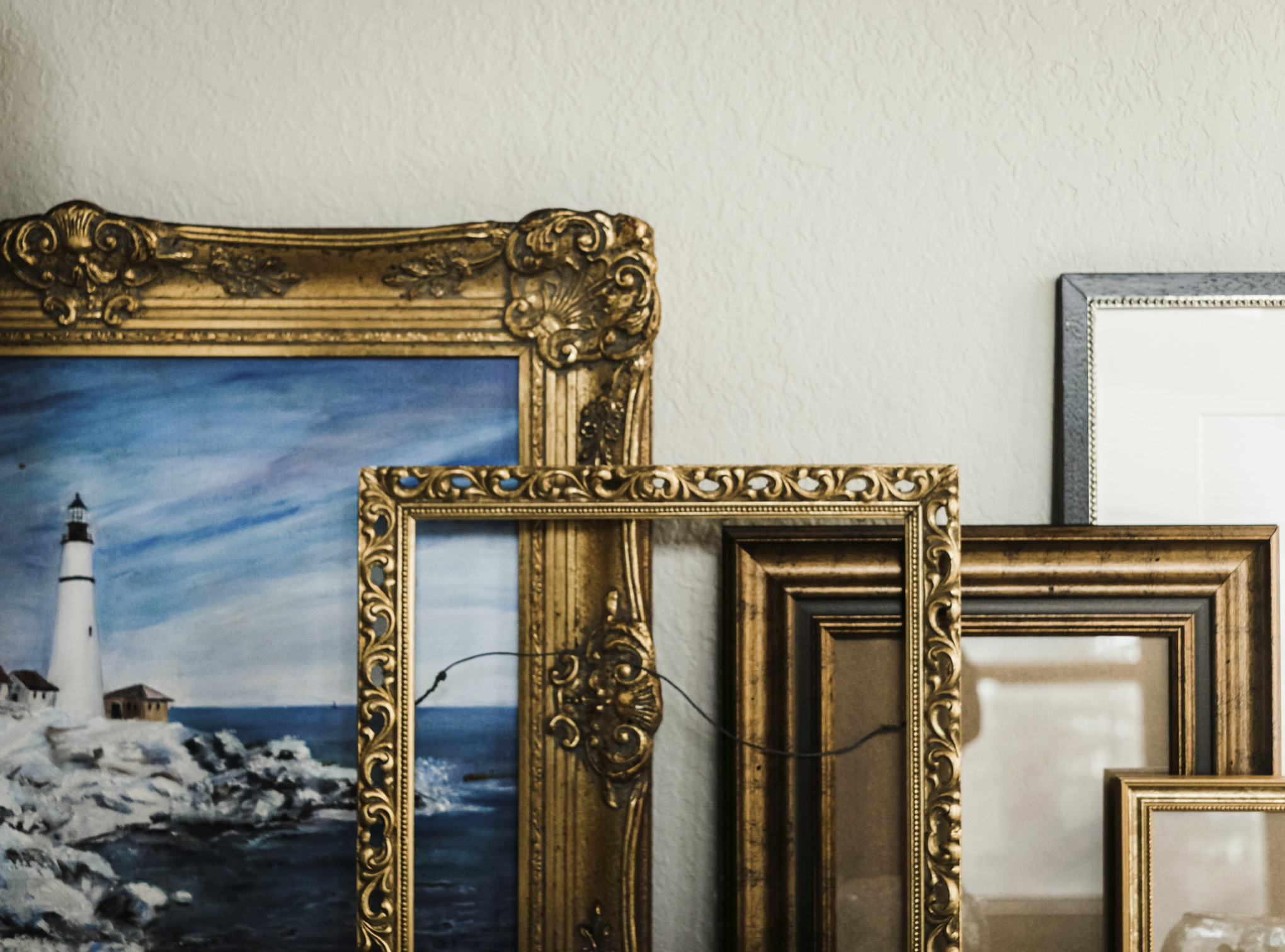
Picture ledges offer a flexible alternative to traditional wall-mounted arrangements. Instead of committing each piece to a permanent position, you can lean framed artwork against the wall and rearrange it whenever your collection changes. This makes ledges especially useful for collectors who frequently acquire new pieces. Layering frames from front to back can add depth and make a small selection feel more substantial, provided the artwork remains stable and visible.
You can also dedicate separate ledges to different areas of the home. Because the artwork is not fixed into a single arrangement, refreshing the display takes minutes rather than an entire afternoon of rehanging.
Turn Unexpected Spaces Into Art Displays
Walls are only one option for showcasing artwork. Look for overlooked areas such as the space above a console, a wide hallway, a stairway landing, or an unused section of shelving where framed pieces can become part of the room’s design. Smaller works can work particularly well in transitional spaces because they encourage visitors to pause and look more closely.
Think about how people move through your home when choosing these locations. Artwork placed along a hallway can create a visual journey, while a carefully positioned piece above a cabinet can become a focal point within a room. Even narrow spaces can contribute to the collection when the artwork is scaled appropriately. Just make sure pieces are securely anchored and protected, particularly when placed in high-traffic hallways where they could easily be bumped, or in moisture-prone areas like kitchens and bathrooms.
Rotate Artwork to Keep the Collection Fresh
Displaying every piece at once is not necessary, especially when your collection has outgrown the available wall space. Rotating artwork allows you to give different pieces their moment. You may store pieces that are not currently on display properly, then bring them back into the rotation when you want to change the atmosphere of a room.
A rotation can also reflect seasons or changes in your decorating preferences without requiring a major redesign. It’s helpful to keep track of which pieces have been displayed and where they were placed so that you can develop new combinations over time for a collection that feels dynamic rather than overcrowded.
Conclusion
A growing art collection can become one of the most distinctive features of your home. Gallery walls, flexible ledges, custom framing, unexpected display areas, and regular rotation can all help you make better use of the space you already have.
The goal is not to fit everything onto the walls at once – it is to create a display that gives each piece room to contribute to the character of your home.